
















TRIGGER WARNING: discussions of sexual abuse and rape
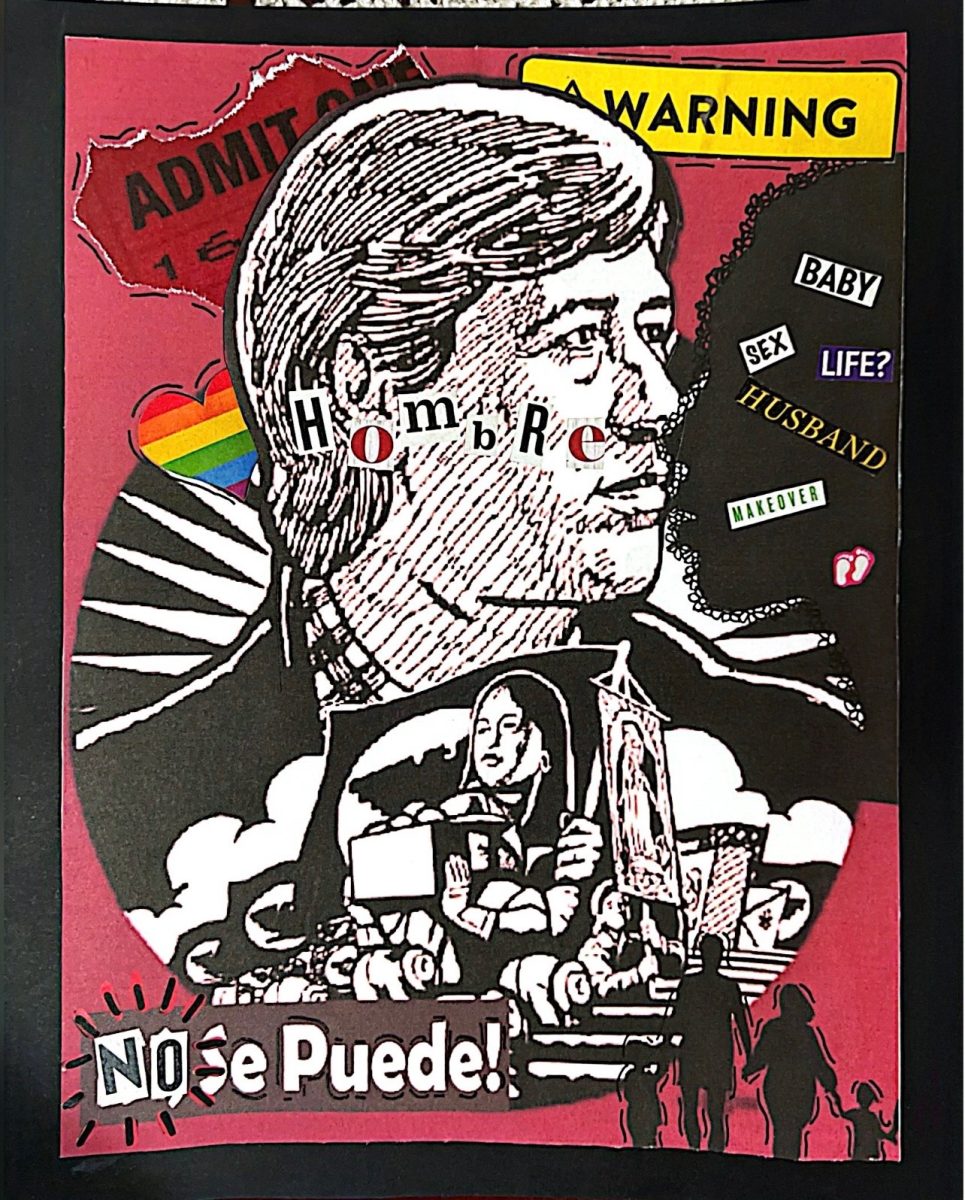
A name widely known for activism, organizing farmworkers and nonviolent methods is now being remembered for the opposite: pedophilia.
Cesar Chavez has been deemed a folk hero and symbol of hope to millions of Americans through his contributions to the founding of and involvement within the United Farm Workers (UFW) for many decades; however, upon recent investigations done by the New York Times, his prolific and extensive history of abuse of young girls has been exposed.
The investigation revealed that from 1972 to 1977, Chavez began grooming Ana Murguia and Debra Rojas, starting as young as eight or nine years old. Murguia was first molested at 13 and the abuse continued for the next four years. Rojas’s molestation began at 12 and it escalated to rape when she was 15.
In addition to underage girls, he pressured Dolores Huerta, co-founder of UFW, into sex in 1960 and years later in 1966, raped her in a grape field. Chavez fathered two of Huerta’s children, including the 1966 assault. In both cases, she arranged for the children to be raised by others.
“I feel like this was a shock to most of the Latinx community. We grow up thinking about Cesar like a hero and we are told to admire him. However, it seems that women continue to be oppressed even in settings meant to be “safe”. Globally, I think this will impact trust within the Latinx community and also what we deem as admirable,” senior Maria Hernandez said.
However, this isn’t the first time victims of Chavez have tried coming forward. Over ten years ago, Rojas posted a message under a Facebook group celebrating Chavez that he had molested her. In response, people accused her of jeopardizing all the UFW accomplished and she deleted the message. Additionally, many UFW leaders who knew about the allegations discouraged his victims from speaking out in order to preserve Chavez’s public image.
Immediately following these horrific findings, the world has responded with complete erasure of the man many once idolized. UFW has canceled its annual celebrations honoring Chavez and marches to honor him were called off in Texas, Arizona and elsewhere. At Sequoia, many teachers have taken down posters and the curriculum is being questioned.
Additionally, officials in multiple states said they would consider renaming the names of streets and schools named in his honor. Our governor, Gavin Newsom, said on March 18 that nobody knew the truth, noting he planned to discuss with legislators whether to rename Cesar Chavez Day on March 31.
While we find these repercussions appropriate in light of the truth, it begs the question: why such a strong national response? The surface-level and more obvious answer is the pedophilia; society can remember the crucial and redefining work of UFW without adulating Chavez.
However, the quick erasure of Chavez is the more complex and nuanced question. The truth, for many, is hard to accept; though, from George Washington to Andrew Jackson, it is clear our society picks and chooses who to forget and who to remember.
“There is a clear difference [between Chavez and white figures]. When the news broke [about Chavez], there was an immediate response to change street names and paint over murals. The community believed the women,” history teacher Kathleen Banister said. “Where is the response for the white figures? How many schools are still named after Thomas Jefferson? It seems that white figures who commit similar atrocities are not held accountable in the same way, and that stems from our country’s history of racism.”
As Banister referenced, Thomas Jefferson maintained a sexual relationship with one of his slaves, Sally Hemings, for nearly 40 years (fathering at least six of her children), which started when she was around 14-16 years old. Yet, it’s no surprise that these findings haven’t tarnished Jefferon’s image in the eyes of white America.
Despite owning slaves, Washington had our nation’s capital named after him, the state of Washington—the only one named after a president—and countless more cities, universities and monuments. Similarly, Andrew Jackson orchestrated the Indian Removal Act, which led to the horrific Trail of Tears, but still, numerous cities and landmarks are in tribute to him.
Seeing as white figures who commit atrocities are still preserved in public memory, the erasure of Chavez reveals less about morality and more about power and whose histories are protected. This immediate action calls into question how as a society, we are quick to villainize people of color because of deeply ingrained cultural narratives and structural biases that construct them as monstrous.
Moreover, according to a New York University study done by professor Adam Alter and three of his colleagues, people are more likely to believe evil acts were done by someone with darker skin. These mental associations between color and morality negatively bias us against people with darker skin tones. This prejudice has far-reaching implications for both our justice system and our social system, and their effects can be seen today in our world’s response to the findings of Chavez.
At Sequoia, Chavez’s role in the UFW is taught in the IB History of the Americas class in its first year. With the recent news, questions have arisen around how the IB curriculum may change with regard to the movement. However, at Sequoia there is not much specific emphasis on Chavez himself.
“We actually center the work of Dolores Huerta and the farm workers themselves. We try not to put too much emphasis on individual leaders in any movement because, ultimately, it is usually the communities and people themselves who make a movement,” Banister said.
As discussions are initiated regarding the tainting of Chavez’s legacy, it is time to call out and discuss the taboo actions committed by other leaders whose history continues to be celebrated and awarded. It is not about ending talks around Chavez, it is about using these conversations to raise awareness for other atrocities that go undiscussed.
“We need to learn this history, and have a critical lens when we study leaders. But it’s not just about history, it’s about how we behave as humans. I hope our school and community improves on making this a safe place for young women and that young men who engage in this type of behavior, whether online or in person, face consequences,” Banister said.
The actions of the United Farm Workers movement made strides for protecting so many Hispanic and Filipino Americans and their legacy should not be forgotten. With the key role Chavez played in the movement and his crimes direct involvement, his actions unfortunately cannot be completely separated from the movement.
However, there are some things that are clear: Chavez should be condemned for his actions and his story will continue to be viewed differently. Additionally, this same attitude towards Chavez needs to be extended to anyone and especially those who are given such major positions of power in our country.
“I don’t believe we should taint the image of workers who honestly fought for the cause, simply because of Cesar’s actions. In doing so, we would be removing a large chunk of history within the Chicano community,” Hernandez said. “However, as a Latina, this has shown me the constant oppression that women can’t seem to escape. It seems like women couldn’t be safe even in a movement meant for them, and that breaks my heart. I admire them for being strong enough to speak up.”
With this heightened focus on Chavez and the movements, we believe our society should move their eyes towards uplifting the voices of his survivors: Ana Murguia, Debra Rojas and Dolores Huerta. Furthermore, we should use this time to shed light on gender-based violence that occurs globally towards women, often going unnoticed and unrecognized.
Mr Beast • Apr 14, 2026 at 9:20 pm
Thank you both for creating this masterpiece. Its gilded exuberance opened my minds eye to broader horizons of intellect. I will cherish this new knowledge of someone we once called a hero of the people and hold it close to my heart to remember that the truth is not always as it seems. I have learned new lessons from this piece that I will not only use in my life, but also preach it to others to spread awareness of the truth as we know it. Once again, thank you.