








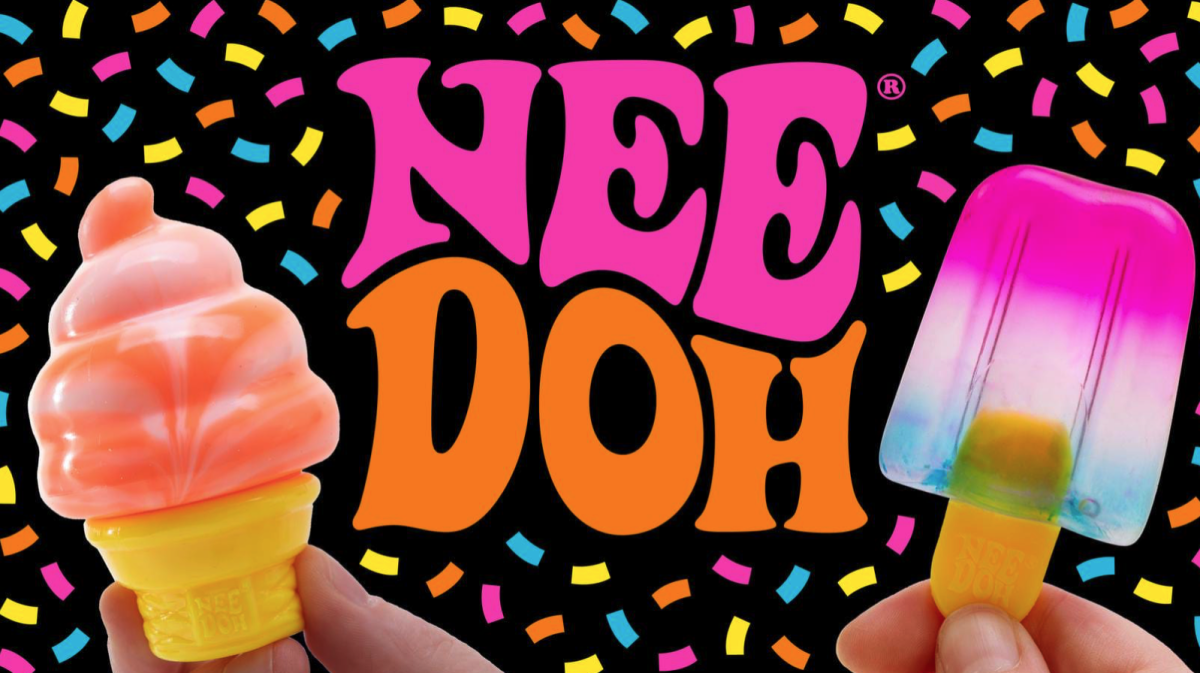




Over the past decade, many short-lived fidget trends have transpired in schools around the country, with the first notable instance of this being the immense popularity of the fidget spinner in 2017. The most recent fidget obsession to appear has been the Nee-Doh craze. Nee-Dohs are vibrant and colorful handheld squishies that come in an array of colors, shapes and sizes, often costing between three and seven dollars and have recently begun to take schools by storm.
The main age demographic for Nee-Dohs, as well as several other fidget fads, are middle and high schoolers, typically between the ages of 12 and 17. There are many reasons why this is the case, including the obvious playful appearance and nature of the toys, being colorful and having many fun shapes available, which appeal to children. Additionally, people in this age group often have a lot of everyday stress that comes with schoolwork and the school environment in general and playing with a fidget can be an effective way to relieve this stress.
“[A Nee-doh] serves as a great thing to fidget with. If […] you’re in class and you’re stressed out and really need some focus, then you can use your Nee-Doh to calm down and focus back on your work” Sequoia freshman Viggo Laustsen said.
This craze has led to a significant increase in sales for many toy stores as Nee-Dohs fly off the shelves. One of these stores is the local Burlingame book and toy store, Gigglemugs.
“In the beginning of January, [sales] started to get really, really crazy. We’ve always had [Nee-Dohs]. We’ve had them for years and years, but the beginning of January is really when this […] craze started” Gigglemugs manager Katherine Babin said.
The Nee-Doh trend is most definitely a recent appearance. However, in an age where trends come and go at extremely quick rates, it is intriguing to see that Nee-Doh sales are still continuing to substantially increase, even months after their initial boom.
“Our [store’s] last big Nee-doh drop was April 12, and […] we sold out instantly, within 30 minutes,” Babin said.
Various fidget toys have exploded in popularity, then faded away numerous times, in a variety of different ways, due to their simple, yet very helpful, qualities. Additionally, the different ways in which they can be interacted with and the abundant stimulation one can receive through playing with them have made fidget toys symbolic of the 2020s.
“[Fidgets] are fun for people, and school can be boring sometimes, so they can be other things to stimulate the human mind. Also, they can help people cope with stress or external trauma. [People] can just squeeze [fidgets] for some extra […] calmness” Laustsen said.
Due to the accessibility, affordability and diversity of fidgets, it is probable that even after the inevitable decline of Nee-Dohs, there are many more fidget crazes in our future.