











As California moves to limit student smartphone use, the Sequoia Union High School District Board of Trustees is weighing how far those restrictions should go.
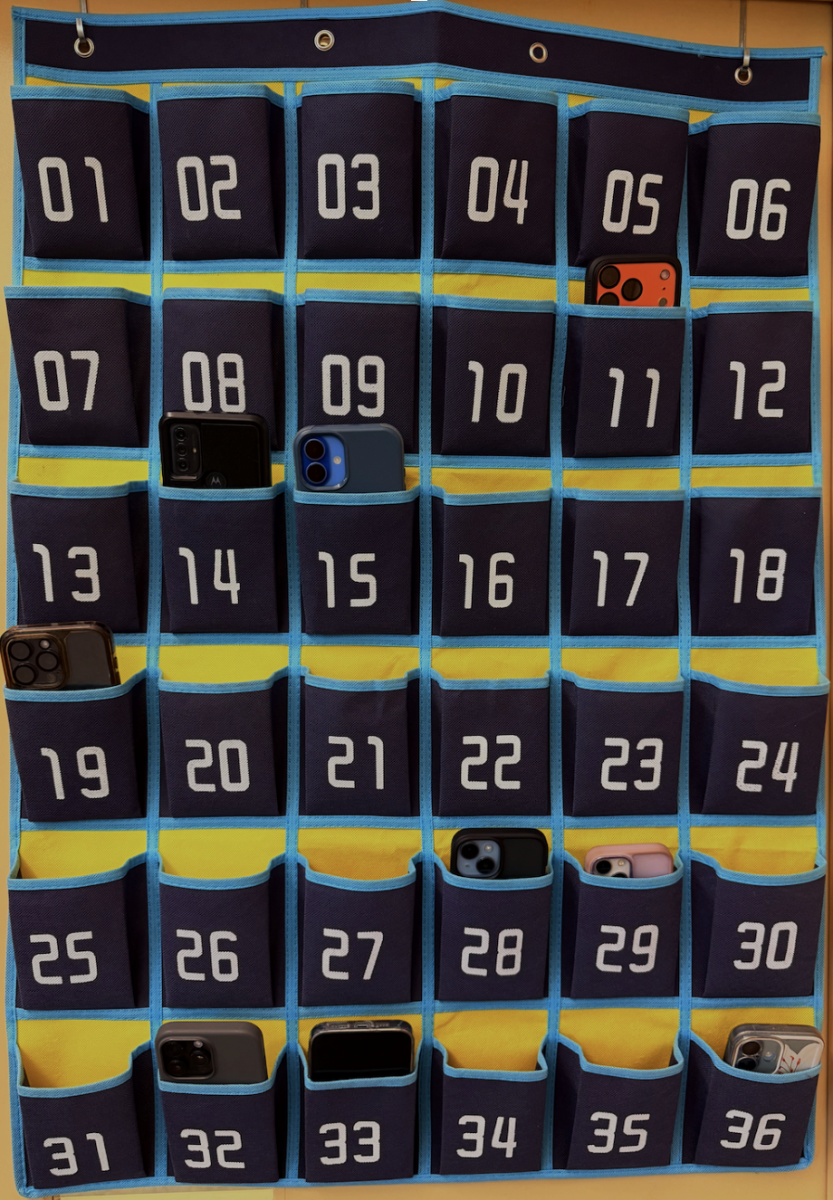
With the passage of California’s Phone-Free School Act (AB 3216), all public school districts, county offices of education and charter schools must adopt policies limiting or prohibiting student smartphone use on campus. In response, the Sequoia district is considering two approaches: a “bell-to-bell” ban on cell phones or restrictions during instructional time while allowing use during passing periods and lunch.
The decision reflects a broader debate playing out in schools across the state, as educators and families weigh concerns about academic focus and student well-being against issues of safety, communication and social connection.
Board members in the nearby San Mateo Union High School District voted last March to implement a “bell-to-bell” ban, while the Palo Alto Unified School District has opted for restrictions during instructional time.
There are many opinions on whether phones should be allowed, from parents concerned about emergencies to teachers and administrators who want students to improve their social and academic skills.
The downside of cell phones in schools includes decreased focus on education and negative social interactions. According to the Sequoia Union High School District website, students who are regularly interrupted by text messages score 10.6% lower on tests. On average, it takes a student 20 minutes to refocus after receiving a notification during class. Social media use is also linked to increased feelings of inadequacy and depression, according to the American Psychological Association (2023).
While data highlights the academic and mental costs of excessive screen time, educators are equally concerned about how this isolation impacts school culture.
“I think that now, as a society, we’re letting digital devices get between us and other people. Instead of having classroom discussions, we might be getting on our computers and just typing away and never noticing the person next to us or knowing what they think,” Vice Principal Gary Gooch said.
One concern voiced by parents regarding cell phone restrictions is the ability to contact their child in the event of an emergency.
“I hear those concerns as a parent. Yes, we want our children to be safe, but the level of training that teachers have on how to keep kids quiet, how to keep kids safe in all of these emergencies, the training that the school has and the training that local emergency responders have,” English teacher Jasmine Shimick said.
There are also many reasons cell phones can be effective in schools, from collaborative learning through shared documents, group chats and project management tools to interactive apps and platforms that create more engaging, personalized learning experiences that adapt to individual learning styles and paces.
Many students feel that having their phones available at lunch is crucial for locating friends and maintaining important social connections.
Principal Sean Priest shared his thoughts on cell phone use, a view shared by 60% to 80% of Gen Z, according to PeopleWin:
“I wish that everyone spent less time looking at their phone.”