














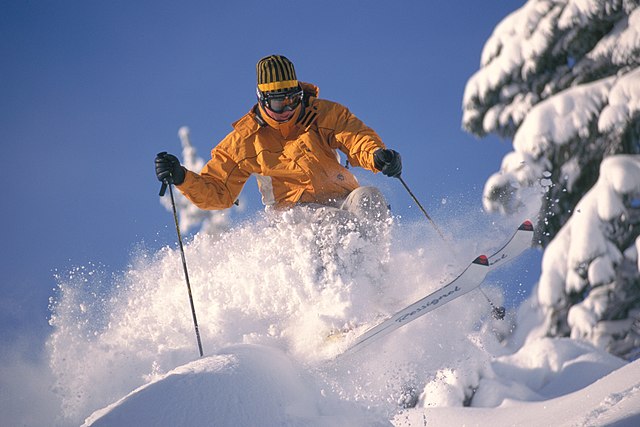
With the midwinter break, also known as ski week, just around the corner, many Sequoia students plan to head to the slopes to ski or snowboard. However, there are a host of apparent dangers that come with snow sports. One question is unavoidable: how can students avoid getting injured during this ski season?
Skiing and snowboarding are high-risk sports, as athletes carve down the slopes at high speeds while avoiding obstructions such as trees, rocks and other people.
“Conditions matter a lot. It’s […] more dangerous when it’s icy, because it’s […] harder to stop, and when you fall, it hurts more,” sophomore Alexander Babb, member of our school’s Skiing and Snowboarding club, said.
Conditions like slushy or icy snow can lead to faster collisions, harder falls and greatly increase the risk of injuries such as ACL tears, other knee injuries and even death.
Unfortunately, resorts near us such as Bear Valley, Donner and many of the resorts in the general Tahoe area are experiencing lower or less favorable snowfall. Challenging conditions are more apparent than ever, and it is important that students stay safe when taking to the slopes.
Thankfully, modern safety measures and equipment in sports are more effective than ever, with the most efficient iterations of gear, from helmets and pants to skis and snowboards, now on the market. Making sure to wear proper gear is essential to verifying one’s safety when participating in a snowsport.
“I say it’s safer than ever. There’s […] a lot of ski patrol helping out everywhere,” Babb said.
The National Ski Patrol has been changing regulations and requirements of members of the system. Some of these shifts include the updated avalanche and skills protocol, implemented for the 2023 and 2024 ski season and more modernized training regimens. Due to this, Ski Patrol is more well equipped and efficient than ever before.Sometimes, the conditions of a run can be too unstable to safely approach.
“Ski resorts can […] close runs that aren’t safe at the moment and prevent people from going on [them],” Babb said.
Ski resorts have increasingly been closing such unsafe runs as of recent, and while it may be frustrating to visitors of resorts, it’s better to be safe than sorry.
“In the end, the most important thing is staying in control and going on runs that you can handle,” Babb said.