











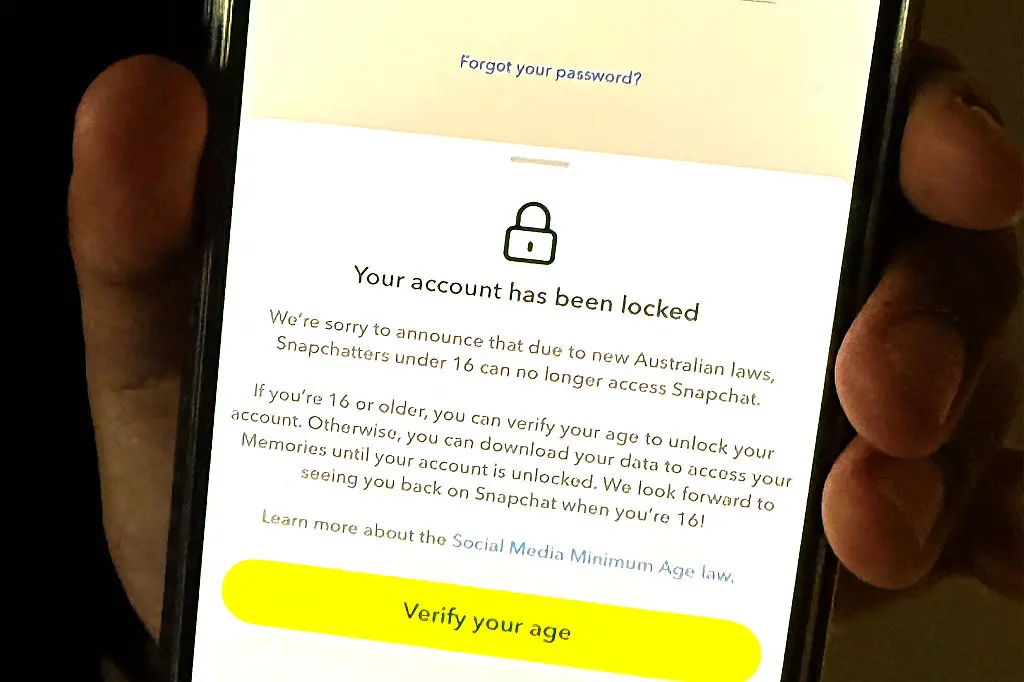
Imagine being told that the apps you’ve grown up with—TikTok, Instagram, Snapchat—are suddenly off limits. For many teens globally, social media is more than just entertainment; it’s how they communicate, learn, and express themselves. Recent news of Australia’s new social media ban for children under 16 has sparked debate worldwide, vastly changing the online experience for teens.
In 2024, Australia passed legislation restricting minors under 16 from creating or maintaining social media accounts on certain platforms, and was officially implemented in December of 2025, hoping to reduce harm and protect children’s mental health. According to UNICEF Australia, 96% of children ages 10-15 use social media, and seven out of ten have been exposed to harmful content, including material promoting eating disorders, self-harm and suicide.
The risks extend beyond what appears on a screen. More than half of young users have experienced cyberbullying, and one in seven has been targeted by or engaged in grooming-type behaviors from older teens or adults. To Australian lawmakers, these dangers outweighed the benefits of unrestricted social media access.
“I feel like cyber bullying, extreme exposure to sexual content and violence are reasons for the ban of social media. Although social media could be beneficial in ways, the risk of getting exposed is always there,” freshman Leah Rodriguez said.
The ban applies to social media platforms Instagram, Snapchat, TikTok, Youtube, X, Reddit, Facebook, Twitch and Threads. While minors can still view some public content, they are unable to log in or create personalized accounts. Additionally, parents are unable to provide consent to override the ban.
“I think parents [should] get to have a final say, not because the child is not responsible to acknowledge what is right from wrong when using social media, but it could be a way to acknowledge how fast information and events can spread throughout social media,” senior Mariangel Perez said.
Responsibility for enforcement lies with the social media companies. Platforms must implement age-verification systems such as ID checks, facial or voice recognition, and behavioral analysis. Companies that fail to prevent underage access face fines up to $49.5 million Australian dollars (about $33 million USD) per child, shifting accountability away from families and onto tech corporations.
Supporters insist that social media exposes young users to cyberbullying, targeted advertising, unrealistic beauty standards, dangerous content and discrimination. However, others argue that social media also offers benefits, including staying connected with friends and family, discovering new interests, learning new information and providing a space for self-expression. Students have mixed opinions, seeing and experiencing the side-affects of social media first hand.
“My initial reaction was more of a ‘wait, for real?” Perez said. “[With early social media use,] there’s higher chances of someone getting exposed to online bullying, unrealistic beauty standards, sexualized content, violence and more.”
For some, the ban worries them because of the potential loss of connection, expressing concern that the ban could isolate teens from news, communities and support systems that now exist online.
“They would be disconnected from the world,” Rodriguez said.
Australia is not alone in addressing these concerns. Countries including the United States, United Kingdom and France are considering similar restrictions. France plans to introduce a ban for teens under 15 in 2026, with President Emmanuel Macron stating, “The brains of our children and adolescents are not for sale.”
As governments attempt to protect young people from online harm, the debate continues: does limiting access truly safeguard teens, or does it risk cutting them off from the digital world they’ve grown up in?