














In late Nov. 2025, a RAM (Random Access Memory) shortage emerged due to the rapid rise in artificial intelligence (AI), leading to a dramatic increase in RAM prices. Since then, concerns have been raised about what the future state of gaming is going to be like. Many wonder how the use of AI will affect the way video games are played, limiting students and some staff at Sequoia due to increased prices on consoles, further restricting availability.
Initially, AI had no impact on gaming, with many prices remaining relatively unchanged. The usage of AI wasn’t even considered a possibility until major companies like Microsoft began investing heavily into AI around late 2024. This caused them to need more RAM, and many of the big RAM manufacturers such as Samsung, SK Hynix and formerly Micron couldn’t keep up with the demand. Eventually, the prices of RAM increased to double their original amounts.
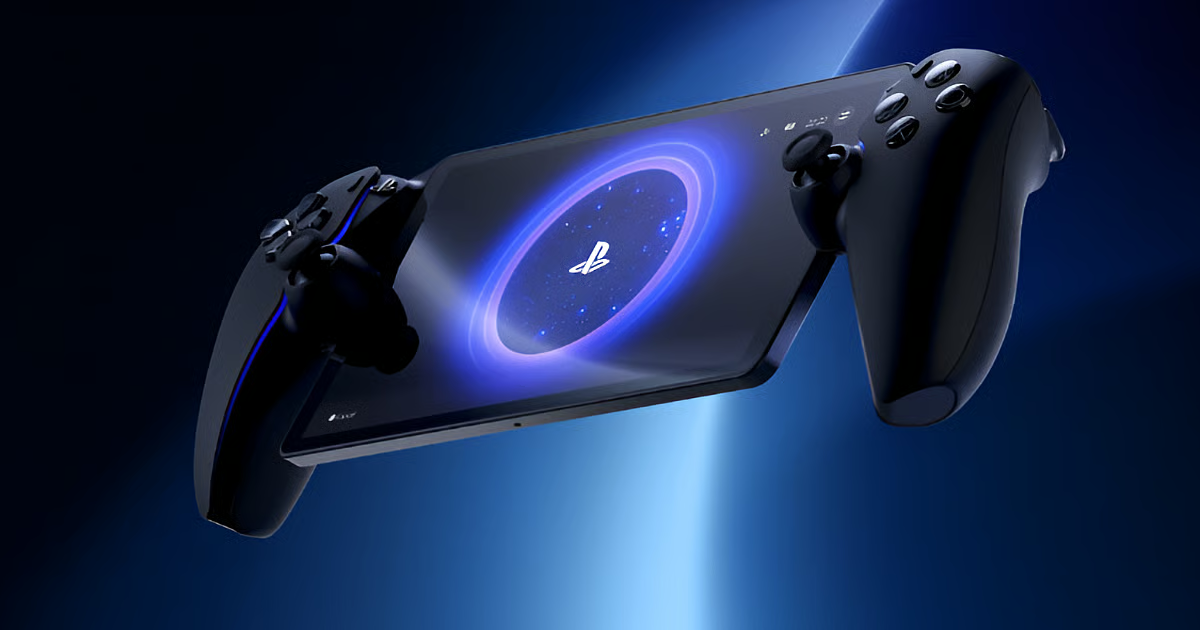
Furthermore, due to this RAM shortage, many companies have decided to raise the prices of their consoles, leading to Sony delaying their next release as a result of the shortage. As of Jan. 2026, Xbox has raised their prices on online accessibility and console prices four times to keep making a profit on their consoles.
“I think AI causing a price hike for systems is sad and I wish there wasn’t such a big push to keep growing AI when all it’s doing is making things worse. The increased prices aren’t really going [in]to effect right now, they’ll only start affecting me once I buy a new console which will probably in the next year or two so then it’ll suck,” junior Pedro Henriquez said.
The difficulty of playing games is also at stake, with Sony planning on making an AI on the PlayStation 6 that can be used whenever you’re struggling to beat a level in a game, called a “ghost player.” This AI would either provide hints or take control outright. This at first seems like a decent idea, allowing those who aren’t good at games to receive assistance, but many red flags are raised when allowing the AI to control your game and some of your actions. This defeats the purpose of getting better at and beating a difficult game.
“The only use case in any of the many types of games I’ve ever played is perhaps for MMOs that include long periods of afk-like grinding. Even then, I think it is up to the user to change their game if they need AI in order for it to be enjoyable,” freshman Ben Rosen said. “As far as tips, I would trust the numerous Let’s-plays and guides of games by real people, rather than the amalgamated information, which, while likely contains truth, gets so much information that there will almost always also be something wrong.”
Sony has also stated that the AI will be able to adapt completely depending on the game you’re playing, using a large pool of data to be able to deal with any problem you’re having. This can harm the competitive aspect of certain games, such as fighting and FPS games, though the AI is unlikely to replicate the highest level of play. Although for MOBA games, it’s a lot harder to say since they require less mechanical skill but more decision-making, though the AI will struggle with the strategy often seen in these games at the highest level of play.
“I believe AI won’t do well in fast-paced games at first, like FPS or fighting games, but in MMOs, there might have to be new rules or pieces of code in some games to stop an AI from playing for you. For AI price hikes or shortages, FPS will likely be most affected, since a large number of players are after a faster monitor or pc for more frames,” Rosen said.