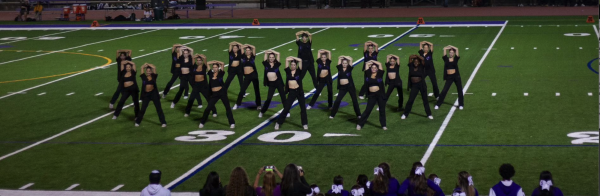









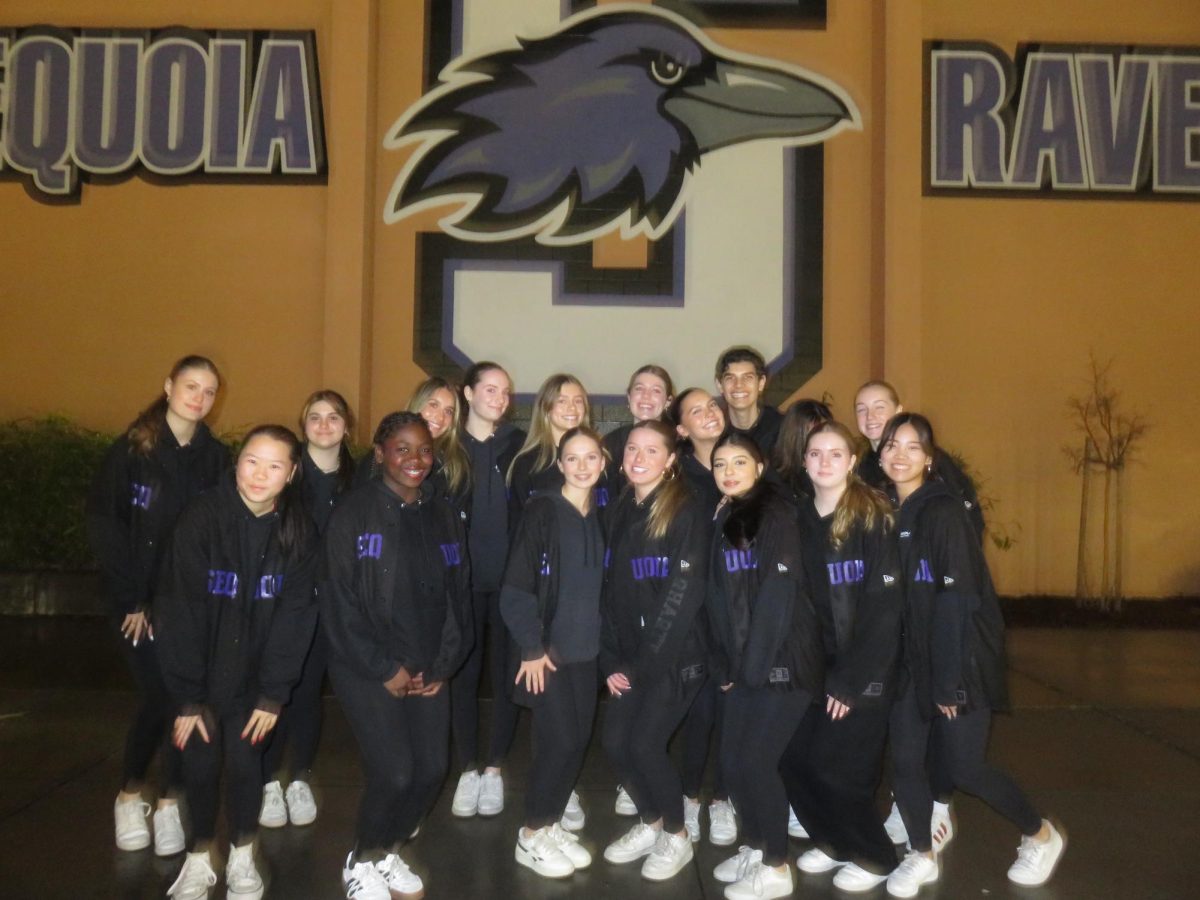
Surrounded by the roar of Friday Night Lights, Sequoia’s Dance Team stretches at the scoreboard, preparing for their halftime performance. Dancers perform for parents, faculty and staff at every home football game and the majority of home basketball games. However, this well-loved and appreciated team runs into problems as they find themselves in the middle of two titles—club or sport—and the financial strain that brings.
Made up of experienced dancers, the team shares a passion for their craft and the thrill of performing. Nonetheless, jerseys, travel and events such as senior night come with a cost, one that is not funded.
The California Interscholastic Federation (CIF) is the organization responsible for overseeing competitions, eligibility and championships for high school athletics, as well as deciding which athletics should be considered a sport. The dance team doesn’t meet CIF sport requirements, meaning the Sequoia Boosters—who fund athletics through coach’s grant applications voted on at booster meetings, typically providing uniforms, transportation and events such as senior night—aren’t able to fund the dance team.
While it doesn’t take money to play the music and create the movements the audience witnesses at games, it does take money to provide the basic necessities that teams require. Ella Kempton, one of the dance team’s captains, helps organize fundraisers such as boba sales and bake sales to offset the cost of these purchases.
“Doing the fundraisers, those are a big undertaking. Buying jerseys, purchasing anything for us, we have difficulty with,” Kempton said.
Dancers pay upwards of $70 to fund their jerseys and host a senior night. The dance team is considered a school club that only practices during seventh period, giving dancers the flexibility to train at professional studios or pursue other extracurriculars. Unique to Sequoia, this is the only club that requires an audition.
“By doing it this way, we’re able to open up to more students, but it is still very selective,” dance team advisor Taylor White said. “It’s hard to make the team because you have to be skilled in many different styles of dance, be a very clean dancer and be able to work well in unison with others, which is not easy.”
Despite holding tryouts like any other sport, because Sequoia’s dance team does not compete against other schools, it is excluded from any booster funding.
“In CIF sports, there’s competition involved against other schools. [CIF sports are when] the sport is a team, you’re competing, there are leagues and playoffs,” athletic director Melissa Schmidt said. “There’s no [Sequoia] high school dance competition.”
In contrast, schools such as Carlmont, Woodside, Aragon and Menlo Atherton—some of which compete—all have their respective school boosters’ funding. Notably, Carlmont placed first in the Varsity High School Small Hip Hop division of West Coast Elite Dance.
“At a lot of other schools, there are coaches. They practice for two hours every day. They get sports credit. They are funded. They have money for uniforms, travel, camps, and more,” White said.
Sequoia dancers don’t get sports credit, provided uniforms, or camps, nor do they practice with a coach or for longer than seventh period. For the most part, Sequoia dance is fully student-run, with a reliance on the skilled and experienced captains. The choreography, arrangement of practices and organization of time—after school or during game time—is all led by students.
“Different schools have different policies on things. [Sequoia] Dance team has gone in and out of existence, and different schools choose to fund things differently; that’s really up to their school and their administration,” Schmidt said.
Regardless of the financial situation, dancers enjoy the rewarding performances and the camaraderie of the team.
“I love [dance team], my experience [at Sequoia] wouldn’t be the same without it. Even though we don’t get any money, I’d do it anyway,” Kempton said.